How do I get my children's book published?

So you've written a children's story and you really want to get it published. What’s next? Lots of questions from new authors show up in my email box. The publishing business sometimes feels scary and confusing, or even impossible. Like so many institutions, it is definitely in transition. What I'm writing here in 2017 could be obsolete next year. But, I’ll answer here the most common questions I receive, and maybe you’ll find some inspiration.
I’ve written a story. Will you illustrate it?

In traditional trade book publishing, which has been my world for many years, the publisher contracts the author's story. Then editors and creative directors decide what style of illustration would work best. They then check in with the illustrator for availability and send the manuscript to review. If the illustrator accepts the job, the publishing house draws up a contract with the artist that includes an advance payment against royalties. When the book 'earns out' the advance, the illustrator and author receive bi-annual royalty payments as long as the book continues to sell.

If you are considering self-publishing and want to hire your own illustrator, understand that professional illustrators are paid well for their work. Since they are probably not receiving future royalties on the sales of your book, their flat fee might be higher than you expect. Illustrating a 32 page book can be months of work.
I do not illustrate books for self published authors. If this is your plan, and you are looking for an illustrator, check out SCBWI.org for portfolios of children’s book artists.
How do I communicate my ideas to the illustrator?
An illustrator sees more in your story than you ever thought possible. When authors say this to me, I feel so happy, as I always want them to be thrilled with the end result of their book.
For me, a book is a collaboration between the author, the illustrator, the editorial staff, the book designer, and more. Everyone brings their best skills to the process. It’s a beautiful thing when all of those creative juices flow together.

One of the sketches for Good Night, Stinky Face board book written by Lisa McCourt
Experienced authors almost never include guidelines for the artist with their manuscripts, unless they need to clarify something about the text. They trust the creative illustrator to bring the manuscript to life. I've been so fortunate to illustrate many books written by Lisa McCourt. She was actually the original editor on I Love You, Stinky Face. Not until I had finished all of the sketches for the book, did she tell me that she wrote the story. We have become very good friends over many years of publishing together, but we still honor the professional process for creating our books.

Most books begin with an author's inspiration. But as the illustrator, a happy art day for me is when my logical brain steps aside allowing ideas to pour out on the paper from a higher source of inspiration. That process almost never happens if I'm thinking... thinking... thinking about what I think the AUTHOR was thinking... thinking... thinking. My goal is to be true to the vision of the book… to make space for happy 'accidents' and delights to appear on the drawing table. Those days fill me with gratitude!
The next step is to send the publishing team the first round of sketches. The art director and editors comment on the sketches, and sometimes suggest tweaks and changes before going to finished art. In my experience, authors rarely see or get to comment on my sketches. Depending on the publishing contract, authors might not see their book until it has been printed, or at least until the design is complete. Either way, the path from the original manuscript to finished children's book is a big transformation. Hopefully, the experience is always exciting, and the result better than the author ever thought possible!
Should I self-publish my book?
I’ve always worked with traditional trade book publishers and sometimes educational publishers. They absorb all of the start up cost to bring a book to the market. Self-publishing changed the market and now almost anyone can pay to publish a book. If you are a public speaker with a big following, or have an idea for a specialty market, this option could work well for you.

While backpacking around Central America, my son got a kick out of finding Mom's Stinky Face books in local book stores.
If you are self-publishing, you are also self-marketing, which can feel like a full time job. Most beginning authors have day jobs. So think about whether you have time or access to promote and sell your book by going to trade shows, local book signings, school visits, doing social media, sending samples to reviewers, etc. If you enjoy this part of the job, go for it!
Verify details carefully before you fork over your own money to a vanity press/ self publisher. Brick and mortar book stores will rarely stock self-published books. But the world of publishing has changed rapidly since the days before Amazon. Many new opportunities exist for sharing your stories with children. I don’t even try to keep up anymore. I totally admit, I am a dinosaur!

Publishers' exhibition spaces at Book Expo America
Publishers have exhibition spaces and sales teams at large trade shows like the American Library Association and Book Expo America. Well known authors sign books and speak at these events and are usually sponsored by their publishers. But you can find rates on the convention websites for renting your own smaller booth.
How do I network with other writers and editors?

Check out SCBWI, The Society of Children’s Book Writers and Illustrators. It’s a great organization for both unpublished and published writers, and you will make many new friends in the writing world. Go to their workshops and conferences, join a writers' group, and be open to helpful critiques of your work. Your writing will improve, and you will gain more confidence. You’ll get lots of advice from published authors and visiting editors. The annual dues are quite reasonable and totally worth it. There is a national chapter and also local state and regional chapters. The national summer event in California is very inspiring!
Should I be afraid to submit my story—what if someone takes my idea?

I’ve judged a few competitions over the years and was surprised by how few truly original stories are submitted. I developed an appreciation for the readers at publishing houses whose jobs consist of going through huge slush piles of manuscripts every week. After reading between two and three hundred manuscripts, I found that only about seven of them highlighted for me. And what was amazing is that the other judges, located all across the country, chose almost the same Top 5 as I did.
Editors must have seen every version of every theme ever written. If your story is indeed original, or has a new spin, they will be so excited to hire you as the author. They've been waiting for you to show up! Nobody is going to take your story!
how do I handle being rejected?
Getting rejected means you are part of an elite club whose members include folks like: J. K. Rowling, Dr. Seuss, Jack Canfield and Mark Victor Hansen, C.S. Lewis, Judy Blume, Beatrix Potter, F. Scott Fitzgerald, and Richard Bach, just to name a few. Their books have sold millions. One of my favorite Peanuts cartoons illustrates the dream:

Getting frustrated and quitting leads nowhere. Set your intention to be brave and positive, knowing that every step you take is leading you somewhere for your highest benefit. Honor every experience, looking for the wisdom, rather than the sorrow. If the world is opening for your story to appear, nothing will stop its success but you. If you happen to get a note on your rejection letter, celebrate! Pay attention to any editorial guidance, and keep dreaming and practicing your craft. Write another story. And another.
Top 3 excellent resources for Children's Book publishing

I originally shared this post in 2017 and have made minor tweaks over the years. But the world is changing so fast now, and life is very different. I’m excited to see what is coming!!! The sources below were helpful to me and my other dinosaur friends in our careers. If you have happened upon this list much later than 2017, search for updated digital versions.
1. A guide book that every new children's book writer or illustrator needs in their education library is Children’s Writer’s and Illustrator’s Market. You'll find submission guidelines for almost every publisher in the U.S. Carefully follow the information. If a publisher states that they don't take unsolicited manuscripts, they mean it. Look for the most current version as the data is updated every year. It also has loads of tips from other authors and illustrators.

2. If you feel your story is ready for publication and you need help with submitting to publishers, consider contacting a publishing agent to see if they will represent you. You can find them in the Literary Marketplace website. Your local library will have a print version in the reference section. They also publish a Guide to Literary Agents, The Writer's Market, and other dedicated guides for poets, novel and short story writers, and more.
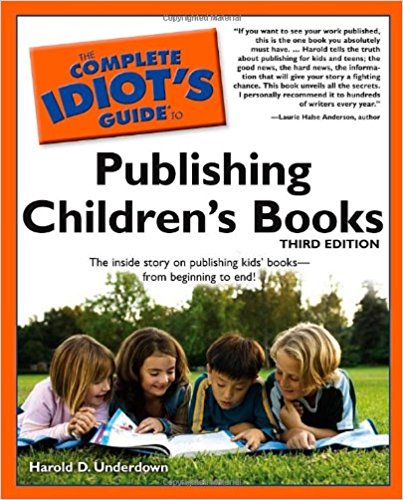
3. And last, but definitely not least, an editor friend, Harold Underdown, has an extremely informative website that every beginner should check out. I don’t say this lightly. Save yourself some frustration. He generously offers a ton of information...all for free. An entire section is devoted to self-publishing. He also wrote the Complete Idiot's Guide to Publishing Children's Books. I learn things from him that I have never known, and I've been at this publishing gig a LONG time.
Good luck, friends! Keep creating and dreaming!